“They Never Told You THIS About GTA…” 31 Secrets, Oddities & Unspoken Truths Hidden Across the Series 😳🔥
Everyone thinks they know GTA.
They’ll tell you it’s about stealing cars, outrunning cops, and laughing at a world that looks suspiciously like ours. They’ll rank games, argue about maps, and fight over which protagonist “carried” the franchise.
But here’s the problem:
Most GTA writing repeats the same surface facts.
Same release dates. Same “best missions.” Same “Vice City vibes.” Same “San Andreas is huge.” Same “GTA IV is dark.” Same “GTA V is a blockbuster.”
So let’s do something different—something that feels like you found a folder Rockstar never meant to leave open.
This article isn’t about what GTA is on paper.
It’s about what GTA is in your head—the hidden design rules, the uncomfortable truths, the weird patterns across games, and the little things that most people feel but never explain.
Warning: after reading this, you’ll notice GTA differently. And that might ruin you—in the best way. 👀

1) GTA’s Biggest “Secret” Isn’t an Easter Egg… It’s a Psychological Trap
Here’s something you almost never see written clearly:
GTA doesn’t primarily sell missions. GTA sells the sensation that something might happen.
That “might” is addictive.
In GTA, a simple drive is never just a drive. It’s a slot machine pull. You don’t know if you’ll see:
- a crash chain reaction
- a random argument that escalates
- a police chase passing you like a storm
- a pedestrian doing something so strange you slow down to watch
- a perfect ramp that begs you to ruin your car
Rockstar fills the world with Almost-Events—moments that look like they could become stories. Your brain hates unfinished patterns, so you keep watching. Keep driving. Keep checking. GTA isn’t just “open world.”
It’s open suspense.

2) GTA Is the Only Major Series Where “Failure” Often Feels Like the Real Game
In most games, failing a mission feels like losing progress.
In GTA, failing often becomes the memorable part: the ridiculous escape attempt, the wrong turn, the accidental explosion, the unexpected police pile-up, the improvised getaway route you swear you’ll “do on purpose next time.”
This is not an accident. GTA’s systems are tuned so that failure can produce comedy and chaos that feels rewarding—even when the mission itself is strict.
Rockstar doesn’t punish mistakes. It weaponizes them.

3) Every GTA Has a “True Theme”… and Fans Usually Pick the Wrong One
Most people think GTA themes are obvious:
- Vice City = 80s crime fantasy
- San Andreas = gang epic
- GTA IV = American Dream tragedy
- GTA V = Hollywood satire
Those are correct—but incomplete.
The deeper theme running through the entire franchise is this:
GTA is about how systems turn people into monsters.
Not just “crime is fun.”
It’s about cities that reward greed, institutions that fail, media that manipulates, and the way survival pushes people into choices they’d never defend in a calm life.
That’s why GTA’s satire works: it’s not random jokes. It’s social pressure written as comedy.

4) GTA III Changed Open Worlds… But Its Darkest Legacy Is Something People Don’t Admit
GTA III made open worlds mainstream. That’s the famous part.
The part people don’t say out loud is this:
GTA III taught the industry that players crave “power without permission.”
It wasn’t the cars. It wasn’t the guns. It was the feeling that the world was yours to disrupt and the rules were optional.
Almost every open-world game after GTA III borrowed that vibe—even games that pretended to be heroic.
Rockstar didn’t just create a genre.
It revealed what players secretly wanted from a world: the ability to break it and still be entertained.
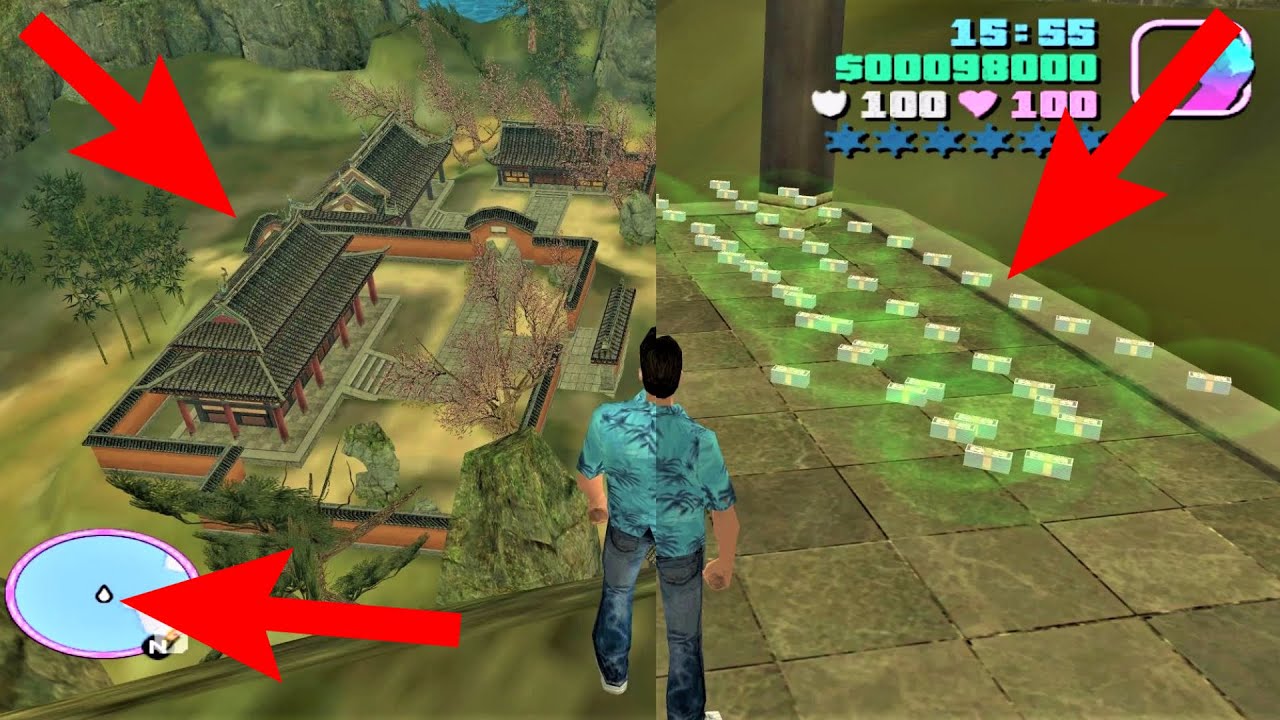
5) Vice City’s Real Superpower Wasn’t Music… It Was “Identity Density” 🌴
People worship Vice City’s soundtrack—and yes, it’s iconic. But Vice City’s deeper magic is what I call identity density:
Every street, every color, every radio ad, every outfit, every skyline angle pushes the same fantasy. You don’t just play Vice City—you absorb it.
That’s why Vice City feels “bigger” than it is. Not because of square kilometers.
Because of cohesion.
Most open worlds are large. Few open worlds are unmistakable.

6) San Andreas Didn’t Predict Roleplay… It Created the Brain Chemistry for It
Long before “RP servers” became a culture, San Andreas trained players to roleplay naturally through systems:
- gym routines
- food choices
- clothing identity
- territory control
- vehicle obsession
San Andreas quietly told players: this isn’t just a character. It’s a lifestyle.
And once a game becomes lifestyle-coded, it stops aging normally. It becomes memory-coded.

7) GTA IV’s “Heavy” Driving Was a Narrative Decision, Not a Tech Limitation
Here’s a hot take most people misunderstand:
GTA IV’s weighty driving wasn’t “bad handling.” It was tonal design.
That heavy physics makes Liberty City feel less like a playground and more like a harsh reality. The cars don’t feel like toys. They feel like machines. And that changes how you move through the world: more caution, more tension, more consequences.
GTA IV wanted you to feel the city’s pressure. The driving is part of the storytelling.

8) GTA V’s Three-Protagonist Trick Wasn’t About Variety… It Was About Mood Control
Most articles say “three protagonists = more gameplay variety.” True, but shallow.
The deeper reason is mood control.
Rockstar used the trio to constantly reset your emotional state:
- Michael gives you polished crime drama.
- Franklin gives you ambition and street perspective.
- Trevor gives you chaos therapy.
Whenever the story gets too serious, Trevor detonates it. Whenever it gets too silly, Michael or Franklin drags it back toward structure.
It’s a narrative mixing board. Rockstar basically DJ’d your emotions.
9) GTA’s Most “Unwritten” Feature: The City Is Always Testing Your Patience
Pay attention and you’ll see it across the series:
GTA worlds constantly put small irritations in your path—traffic, pedestrians, awkward turns, slow drivers, narrow alleys, police sightlines.
Why?
Because irritation is fuel.
It nudges you toward bad decisions. It makes you honk. It makes you cut lanes. It makes you take risks. It makes you explode into a chain reaction that becomes a story.
GTA doesn’t wait for you to create chaos.
It provokes you into it.

10) The “Real” GTA Timeline Isn’t the Release Dates… It’s Rockstar Learning to Simulate Attention
This is the part that almost never gets said:
Rockstar’s evolution isn’t just better graphics or bigger maps.
It’s increasingly precise control over what you notice.
Early GTA gave you freedom and said “go.” Later GTA learned to guide your eyes subtly with lighting, road curves, landmark placement, crowd density, audio cues, and “coincidental” events.
GTA feels alive partly because Rockstar designs your attention like a director designs a camera shot—except you’re the camera.

11) GTA VI’s Biggest Threat Isn’t Competition… It’s Reality Itself 😬
Here’s the uncomfortable truth about the modern era:
Real life has become a GTA parody. Viral crime clips, influencer chaos, absurd headlines, meme culture, online outrage cycles… the world already feels like satire.
That means GTA VI has a new problem:
How do you satirize a world that already satirizes itself?
If Rockstar finds the answer, GTA VI won’t just be “another GTA.” It will become the most accurate mirror the series has ever held up to society—whether people like it or not.

12) The Final Unspoken Truth: GTA Doesn’t Age Like a Game—It Ages Like a City ✅
Most games age like tech. Better graphics arrive, old graphics look worse, and nostalgia does the rest.
GTA doesn’t age like that.
GTA ages like a city in your memory:
- You remember the vibe of a neighborhood.
- You remember the radio station like it’s an era of your life.
- You remember shortcuts like you lived there.
- You remember a random corner where something wild happened.
That’s why people argue about GTA the way they argue about real places.
Because Rockstar’s greatest “unwritten” achievement is simple:
It made imaginary cities feel like lived experience. 🏙️
So… What “Has Never Been Written” About GTA?
Here it is in one sentence:
GTA isn’t just a crime series. It’s a long-running experiment in how to turn curiosity, irritation, and freedom into stories you create yourself.
Rockstar didn’t only build a genre.
It built a machine that produces memories.
And once you’ve lived inside that machine, no other open world feels the same.

)